Three Ingredients. Two Days. One Loaf.
- happycinnamonbaker
- 4 days ago
- 7 min read

Maybe it comes with the job, or perhaps I am simply too curious, but whenever I walk into a shop with a bakery section, I always have to stop and take a look. Part of it is looking for inspiration, part of it is wanting to see what other bakers and businesses are creating. But mostly, I just genuinely enjoy seeing the different breads, flavours and ideas people come up with. So, when I was in Lidl a few days ago, I naturally found myself looking around the bakery section and noticed a white sourdough loaf and checked the price per kilogram. At that store, on that day, the Lidl loaf was approximately 50p less per kilogram than ours. It got me thinking. From the shelf label alone, the comparison seemed simple. Both were described as sourdough, both were loaves of bread. One was slightly cheaper, so it should have been a no-brainer, right?
But price per kilogram only tells you the cost and weight of the finished product. It doesn't tell you when the process began, how the dough was handled, how long it fermented, when it was baked or what it took to put that loaf on the shelf.
The bread you buy from us today began its journey two days ago.

Different bread, different systems
Supermarkets provide convenient and affordable food at a scale a small bakery could never match. Every household has different budgets and priorities, and nobody should feel judged for choosing the bread that works for them. We can only speak with certainty about the bread we make ourselves. We know what goes into it, who handles it, when the process begins and how much work is required before it reaches the shelf. That's the story a price label cannot tell.
Three ingredients—and perhaps a fourth

Our traditional sourdough is made from Shipton Mill flour, water and salt. That's it. Although, if you allow us one ingredient that will never appear on the official label, we might add a little love as the fourth. Whilst the ingredient list is simple, the process is not. Sourdough is not a fixed formula; it is a living process that responds to temperature, humidity and time. We can't blindly follow the same timetable every day and expect exactly the same result. A stage that takes 4 hours today may take less tomorrow; temperature, humidity, water temperature and the conditions inside the bakery all influence how quickly the dough develops. That means we need to do more than follow a recipe; we have to understand the dough, watch how it rises, feel its strength and look at how it responds when folded. We need to recognise if it needs more time and or that it's ready for the next stage. The clock only gives us guidance, the dough gives us the answer.
What it takes to put one loaf on the shelf
When you see freshly baked sourdough in Happy Cinnamon, the process did not begin that morning, it started two evenings prior.
Two evenings before baking
We feed and prepare our sourdough culture, it needs time to become active and strong enough to raise the dough naturally. We can't decide at the last minute that we'd like another twenty loaves. The preparation has to begin well in advance.
The following day

We carefully measure the flour, water and salt, then begin mixing and kneading the dough. Once that is complete, the dough rests, but it's not simply left alone for the day;
over the following hours, we return to it repeatedly and fold it. These folds build strength and structure while fermentation continues. Throughout this stage, we monitor how the dough is developing. This is where experience matters, the process might take a certain number of hours one day and considerably less the next. A warmer or more humid bakery can change the entire schedule. This can't be forced. Once it's ready, we divide and shape every loaf before placing them individually into proofing baskets. The shaped loaves then go into the fridge for at least 16 hours, where they ferment slowly overnight.
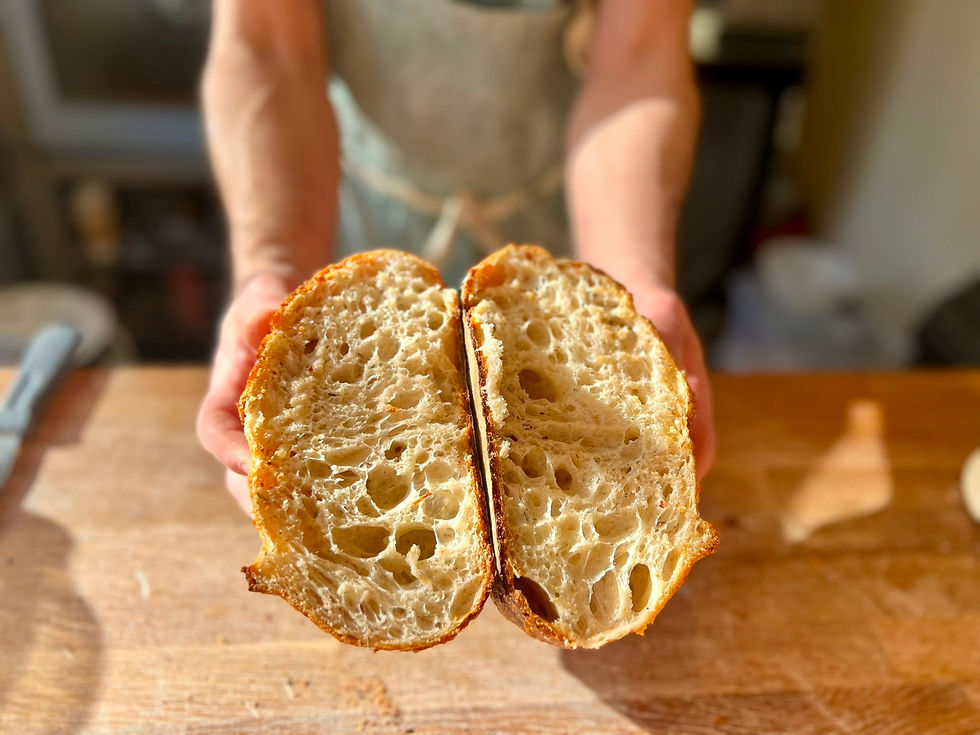
At around 4am the following morning
While most people are still asleep, we return to the bakery. The loaves are removed from their proofing baskets, scored and baked. They then need time to cool before they can be placed onto the shelf. Only after all of that are they ready for you to buy. The loaf may disappear from the shelf in minutes, but making it took two days. They may sell within minutes, but making them took two days. That is why, if the shelf is empty by 10 or 11am, we cannot simply start another batch and refill it before lunch. The number of loaves available that morning had to be decided two days earlier.
So why not bake more in the first place?
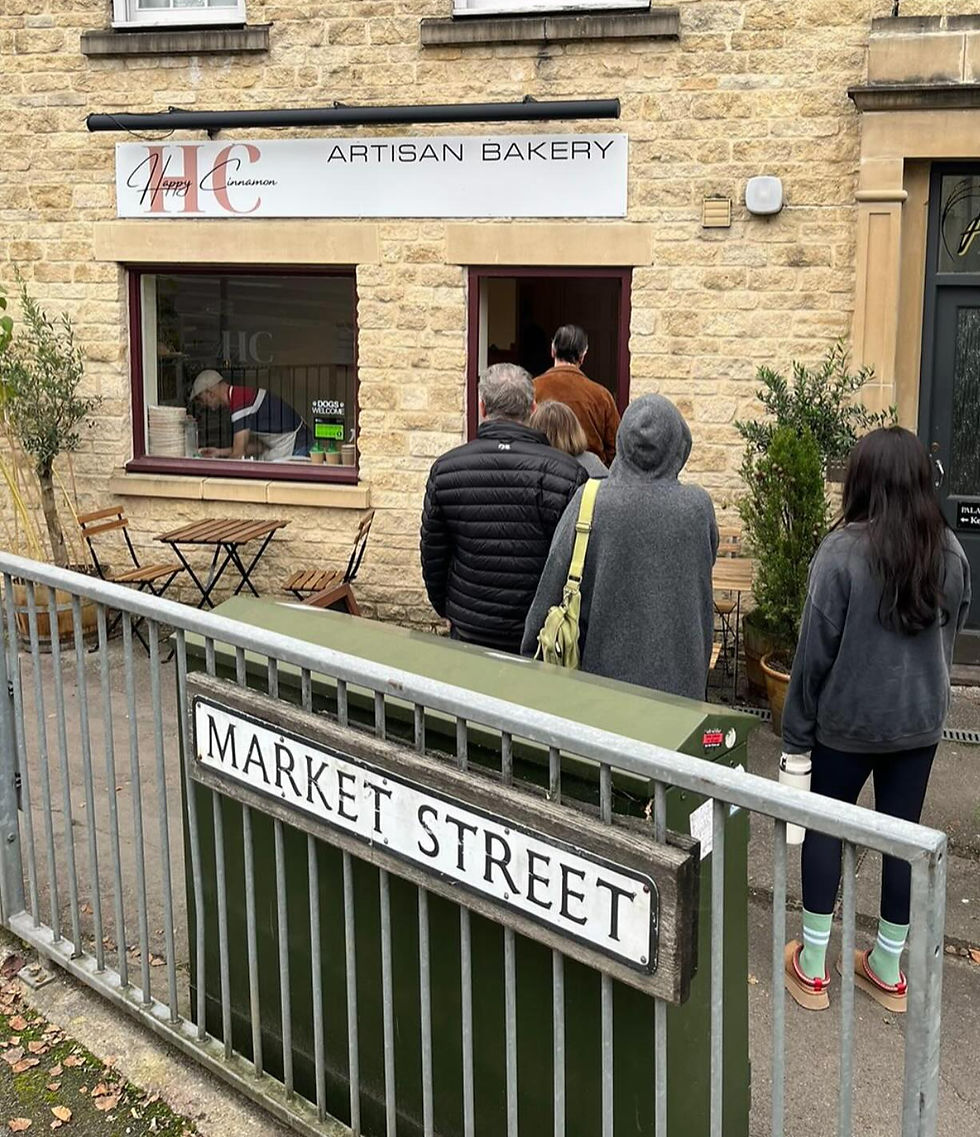
That is the obvious question—and the honest answer is that we are constantly trying to predict demand before we know how busy a day will be. Every additional loaf has to be planned two days in advance. It requires more flour, labour, proofing baskets, fridge space, oven capacity and time. If we significantly increase production after one unusually busy morning, we may be left with too much bread the following day. That would mean wasting good ingredients, energy and hours of skilled work. One sell-out might simply mean we had an exceptionally busy day, consistent sell-outs show us that demand has genuinely increased and that we can safely make more as part of our regular production. This is why pre-orders are so valuable. They help customers secure their bread, but they also give us better information about how many loaves we should prepare. Thanks to our customers, we are selling out more regularly and leftovers are becoming less common. That allows us to increase production gradually, based on sustained demand rather than guesswork.
And what if we make too much?

Even with careful planning, no bakery can predict demand perfectly.
Weather, school holidays, local events and countless other factors can change how many people walk through the door. When we have any bread and pastries left at the end of the day, we donate it to charities and community organisations that can help feed people who may not otherwise have access to good-quality bread. We would much rather see our bread feeding somebody than being thrown away. But donating leftovers does not make deliberate overproduction responsible. The flour still had to be grown and milled. The dough still required two days of preparation. The ovens still used energy, and our bakers still gave their time. A permanently full shelf may look reassuring, but if large quantities of bread remain unsold every evening, something has gone wrong. Our aim is to make enough bread for our customers while avoiding unnecessary waste. Pre-orders and consistent demand help us get that balance right.
What does the price difference actually pay for?

When you buy a Happy Cinnamon sourdough loaf, you are not paying only for its weight. You're paying for high-quality flour from Shipton Mill. You're paying for the hours spent preparing, resting and folding the dough, for every loaf to be divided and shaped by hand, for at least 16 hours of overnight fermentation. You're paying for refrigeration, proofing baskets, oven capacity and energy, for a baker to begin work at around 4am so the bread can be fresh when you arrive. And you are paying for the experience required to recognise when today’s dough is developing faster than yesterday’s because the bakery is warmer or the air is more humid. None of that is visible in a price-per-kilogram calculation, but all of it is present in the loaf. Being independent doesn't automatically make a product worth buying. Our bread still has to justify its price through its flavour, crust, texture and consistency. The process matters but the finished loaf has to deliver too.
The same name doesn't always mean the same product
Two loaves can both be described as sourdough while differing in their ingredients, production methods, fermentation time, freshness and scale. That doesn't automatically make one good and the other bad. It means the word sourdough doesn't tell the whole story.
Customers should feel able to ask:
How was it made?
How long was it fermented?
Where was it produced?
When was it baked?
At Happy Cinnamon, we can answer those questions because we are the people making the bread. We know when the process began, how the dough behaved, who shaped the loaves and what time they went into the oven. The person handing you the bread may be the same person who mixed, folded, shaped or baked it. There is no distant production chain separating the maker from the customer.
We know price matters
For many households, every part of the weekly shop has to be considered carefully. Nobody should feel guilty for choosing the bread they can afford or the option that is most convenient. The point is not to tell anybody where they should shop, but to make the process behind our price visible. A national supermarket can buy ingredients in enormous quantities and distribute costs across hundreds of locations, whereas a small bakery cannot compete with that scale. And we shouldn't try. Our strength is not in the volume, it's transparency, freshness, skill and direct control over what we make. The price of our loaf reflects what it costs to make the bread properly and keep the bakery sustainable enough to do it all again tomorrow.
Reserve your loaf
Our sourdough is baked fresh each morning in limited batches. Pre-ordering helps you reserve your loaf before it sells out. It also helps us understand demand so we can increase production responsibly.
Or visit us in:
We can't promise that the bread shelf will remain full all day.
We can promise that the loaves placed on it were made properly.


Comments